 http://rex-curry.jpg
|
Pledge of Allegiance
in
images & articles at http://rexcurry.net/book1a1contents-pledge.html
For fascinating information about symbolism see http://rexcurry.net/book1a1contents-swastika.html Hear audio on worldwide radio at http://rexcurry.net/audio-rex-curry-podcast-radio.html |
| HISTORY OF THE BULOVA WATCH COMPANY In the history of watch companies, the American firm of Bulova stands out as a leader and innovator. Joseph Bulova led a libertarian life that brought him as an immigrant from Bohemia (Czechoslovakia) to the capital of capitalism, the U.S.A., in 1875 at the age of 23. In bustling New York City, the entrepreneur founded what would soon become the Bulova Watch Company. An icon of innovation and imagination, he realized the American dream. Mr. Bulova set a good example to the world of free markets an laissez-faire economics. It was an important time to do so because anti-capitalist dogma was growing under the work Edward Bellamy and Francis Bellamy, cousins and cohort in the USA's socialism movement. 1888 was the year of publication of Edward Bellamy's novel "Looking Backward: from 2000 to 1887." In 1892, Francis Bellamy wrote the "Pledge of Allegiance" to promote socialism in government schools. The work of the Bellamy Boys led to a government takeover of education and to robotic chanting every day at the ring of the government's bell at the same time on the clock. The early Pledge used a straight-arm salute and it was the origin of the salute of the monstrous National Socialist German Workers' Party (a discovery made by the horological historian Dr. Rex Curry, author of "Pledge of Allegiance Secrets"). Edward's book was an international bestseller, translated into every major language (including German, Russian and Chinese) and it inspired socialism worldwide. In 1917, Russia underwent the turmoil that created the former Union of Soviet Socialist Republics. In 1920, Germany witnessed the start of the National Socialist German Workers' Party. Similar events led to the revolution that created Chairman Mao and the Peoples' Republic of China. The Bellamy dogma influenced people inside the USA, and in the socialist Wholecaust (of which the Holocaust was a part): 62 million dead under the Union of Soviet Socialist Republics; 49 million dead under the Peoples' Republic of China; 21 million dead under the National Socialist German Workers' Party. It was the worst slaughter of humanity of all time in history. The Bulova Watch Company was the first American manufacturer to offer a full line of wristwatches for men in 1919 after the First World War. At that time, capitalism made watches more affordable and fashionable, so that more men could wear wristwatches. Before that time, it was considered effeminate to wear such a timepiece, and the delicate items would easily break in rough work or activity. But after the war, as the USA returned to its libertarian business pursuits, capitalism continued to set the standards for providing feed, clothe and shelter the world, and providing other wonderful goods. Bulova capitalized on the trend! In 1926 Bulova Produced the nation's first ever radio spot commercial, "At the tone, it's 8 PM, B-U-L-O-V-A Watch Time." A Bulova print ad stated "Better Watches for Better Business." In 1928 Bulova introduced the world's first clock radio. On October 1, 1938, Joseph Bulova's homeland (Czechoslovakia) was invaded when Germany under the National Socialist German Workers' Party marched into the Sudetenland. On August 23, 1939, the Union of Soviet Socialist Republics joined with the National Socialist German Workers' Party to invade Poland in a pact to divide up Europe. The National Socialist German Workers’ Party (NSGWP) invaded Poland on September 1, 1939, and Soviet Socialists followed shortly thereafter (Sept. 17). In their role as allies, Soviet Socialists slaughtered more people in Poland than did German Socialists. In addition to perpetrating genocide, socialists also imposed slavery. Much of the world descended into socialist slavery. The Union of Soviet Socialist Republics even manufactured a watch bearing the name "SLAVA." 
The word "slave" has the etymological root "Slav" because Slavs were often enslaved. Slavs were the origin of the word "slave" in European lanuages and in Arabic. "Slavic" refers to a lot of people, including Caucasian, Slovak (Czechoslovakian), Slovene (Slovenia & parts of Austria & Italy), Polish, Serbo-Croatian, Bulgarian, Ukrainian, and Russian. The word is also related to the word "Serb," which is related to the origin of the words "serf" and "serve" and "servitude," again via the same root concept of "slave." Throughout history, the Serbs have been situated between two important
cultures: the Byzantine East (Islamic East) and the Latin West. They were
subjugated into slavery by the Moslem Turks for over five centuries during
the Middle Ages. Eventually the USSR realized the negative connotations of the watch's name in the West. The name was changed to "Craba." In Cyrillic, the word "slavs" is "славянин." After the collapse of the Soviet Socialism, Slavs and Serbs celebrated
freedom again. The Slava watch factory and its property were expected to be rescued
from socialism and returned (sold) to the open market, economic freedom,
and capitalism as private property for retail development. Today, the word "slava" has many meanings in Russia, Serbia and
other countries. "Slava" often is praise and glorification for deliverance
from slavey. It is often directed toward a saint believed to have interceded
for deliverance. A Slava sometimes celebrates the day that a family's main
ancestor killed his first Turkish soldier during the wars between Serbia
and Turkey. Slava celebrations have many parallels to Passover celebrations,
including commemoration of exodus from slavery. The Slava celebration revived in Serbia after the fall of the socialist
regime in Yugoslavia. It is unfortunate to note that during the time when the USSR and NSDAP grew so large, there was alphabetic symbolism used for sinister purposes overseas and in Joseph Bulova's homeland. Although the swastika was an ancient symbol, Professor Curry discovered that it was also used sometimes by the National Socialist German Workers' Party (NSGWP) and by the Union of Soviet Socialist Republics to represent overlapping "S" letters for their "socialism." The NSGWP's leader altered his own signature to use the same stylized "S" letter for "socialist" and similar alphabetic symbolism still shows on Volkswagens. John Toland’s biography of the NSGWP's leader makes reference to Hans Knirsch, founder of the National Socialist Workers Party in Czeckoslovakia also known as the Sudetendeutsche National Sozialistische Partei or Sudeten-German National Socialist Party (p 183). If the swastika was a symbol of the Sudetendeutsche National Sozialistische Partei, then it provides another interpretation for the swastika's two overlapping "S" letters: "Sudeten Socialism" or even "Southern Socialism." The word "Sudeten" came to mean "Southern" for many Germans, even though the original etymology is unclear. For the rest of the world, the symbol might as well have represented overlapping "S" letters for "socialist slavery." It is fortunate to note that those forces of socialism were defeated. Vintage Bulova watches of that time period often have a unique and coveted crown that has the raised letter "B" for "Bulova." That alphabetice symbolism was also repeated in commercial advertisements for Bulova watches. Later, Bulova would also become famous for its unique and coveted tuning fork crowns and decorations. Bulova went on to fame for fine time-pieces such as Accutron, the tuning fork, Accuquartz, Spaceview, Marine Star, Caravelle, and the Bulova pocket watch, the Bulova radio and other Bulova treasures. That decisiveness, willingness to take risk, and quick action quickly advanced Bulova past its competition from American firms like Hamilton, Waltham and Illinois. The pulse of the country was capitalism and the Bulova Company grew. Bulova has long been both a leader and innovator of the study and advancement of horology. |
Be
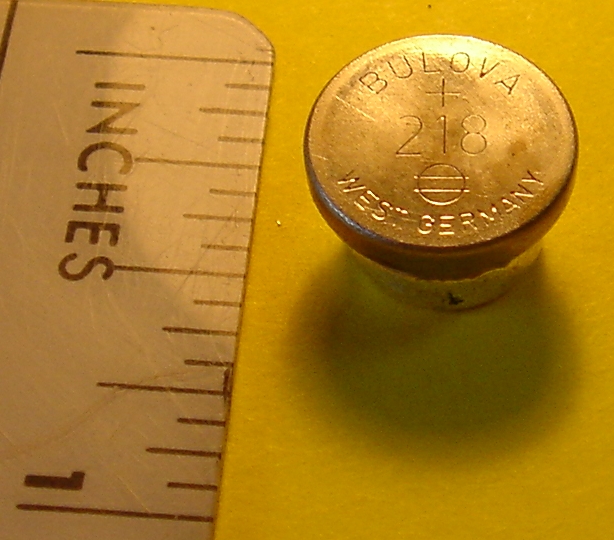
the first in your circle to own this unique jewelry made from genuine vintage
BULOVA WRISTWATCH treasure. This hanging
charm is Ideal for a key chain, bracelet, neck chain, watch fob, wristwatch
accent, tie tacks, lapel pins, earrings, necklaces, body piercings(?). This
would be loved by all chronic chronological connoiseurs of Accutron, the tuning
fork, Accuquartz, Spaceview, Marine Star, Caravelle, or the Bulova pocket
watch, the Bulova radio or any Bulova prizes. WHAT A CONVERSATION PIECE !!! 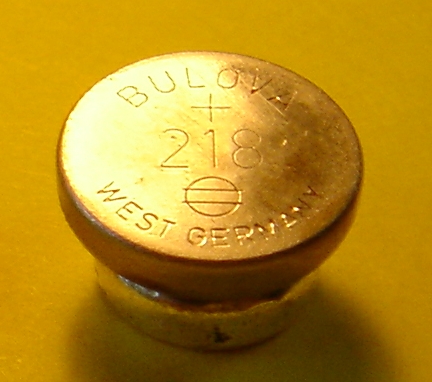
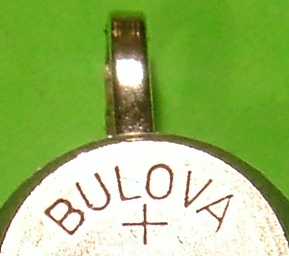
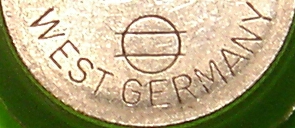
It's a fun to "watch" watch accessory for all watch-watchers. A great gift and just in time for the gift-giving season. It is very collectible in that I have never seen another one like it other than my own examples. The item pictured is an example of one of a few that are presently available for purchase, though not necessarily the exact same piece that will be sent, though all bear the coveted "BULOVA" name and the 218 number and "West Germany." West Germany existed from 1949 to 1990. The jewelry is collectible in an additional sense in that West Germany no longer exists. This piece is all metallic and does not involve any plastic adapter casing at all. This beauty boasts engraved markings on the stunning shimmering face. Savor the remarkable detail work on the front and note the vintage appearance. Time flies, Bulova soars. Bodacious Bulova is the best! 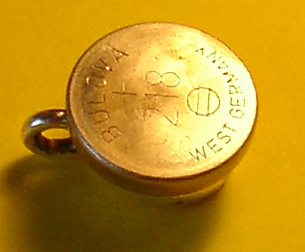
|
|
BULOVA
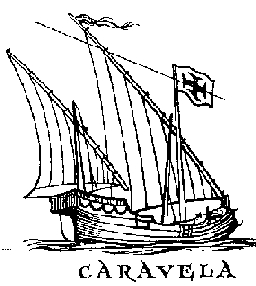
CARAVELLE!
Caravelle conjures luxury and recreation. It was the term used for beautiful historic ships called "caravelles" and is related to other words that have nautical origins, such as "corvette" and "corvair." Caravelles were used for trade and discovery. A caravelle was used by Christopher Columbus in his voyage in the Americas. The words are also related to the words "car" and "carry" and "chariot" and "cart." |

|
"Caravelle" is still used to
name luxury and recreational boats today. Both "Caravel" and "Corvette"
appear in common dictionaries that define them as types of ships and often
showing the relationship in etymology. Luxury and recreational cars
were often named after ships. |
| Support economic
freedom and fund education about it's history, development, etymology, and
its role in creating luxury and recreation. |
| This
photo below is more great jewelry made from genuine
vintage BULOVA treasure. At the Ebay store at http://stores.ebay.com/Rex-Curry |
| |