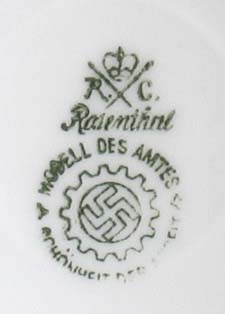
ALLACH PORCELAIN MUNICH GERMANY SWASTIKA MARK

Frightening information about the history of the Pledge of Allegiance is at http://rexcurry.net/book1a1contents-pledge.html (with shocking historical photographs).
For fascinating information about symbolism see http://rexcurry.net/book1a1contents-swastika.html 
Hear audio on worldwide radio at http://rexcurry.net/audio-rex-curry-podcast-radio.html

Allach porcelain munich german swastika mark Dr. Rex Curry
Allach Porcelain uses a logo that exposes the swastika as crossed "S" letters symbolizing "Socialism" under the monstrous National Socialist German Workers' Party. http://rexcurry.net/allach-porcelain-munich-germany-swastika-mark.html

It provides additional confirmation of the amazing discoveries of the historian Dr. Rex Curry (author of "Swastika Secrets).  http://rexcurry.net/book1a1contents-swastika.html

It joins the Volkswagen logo in exposing similar alphabetic symbolism. http://rexcurry.net/bookchapter4a1a2a.html

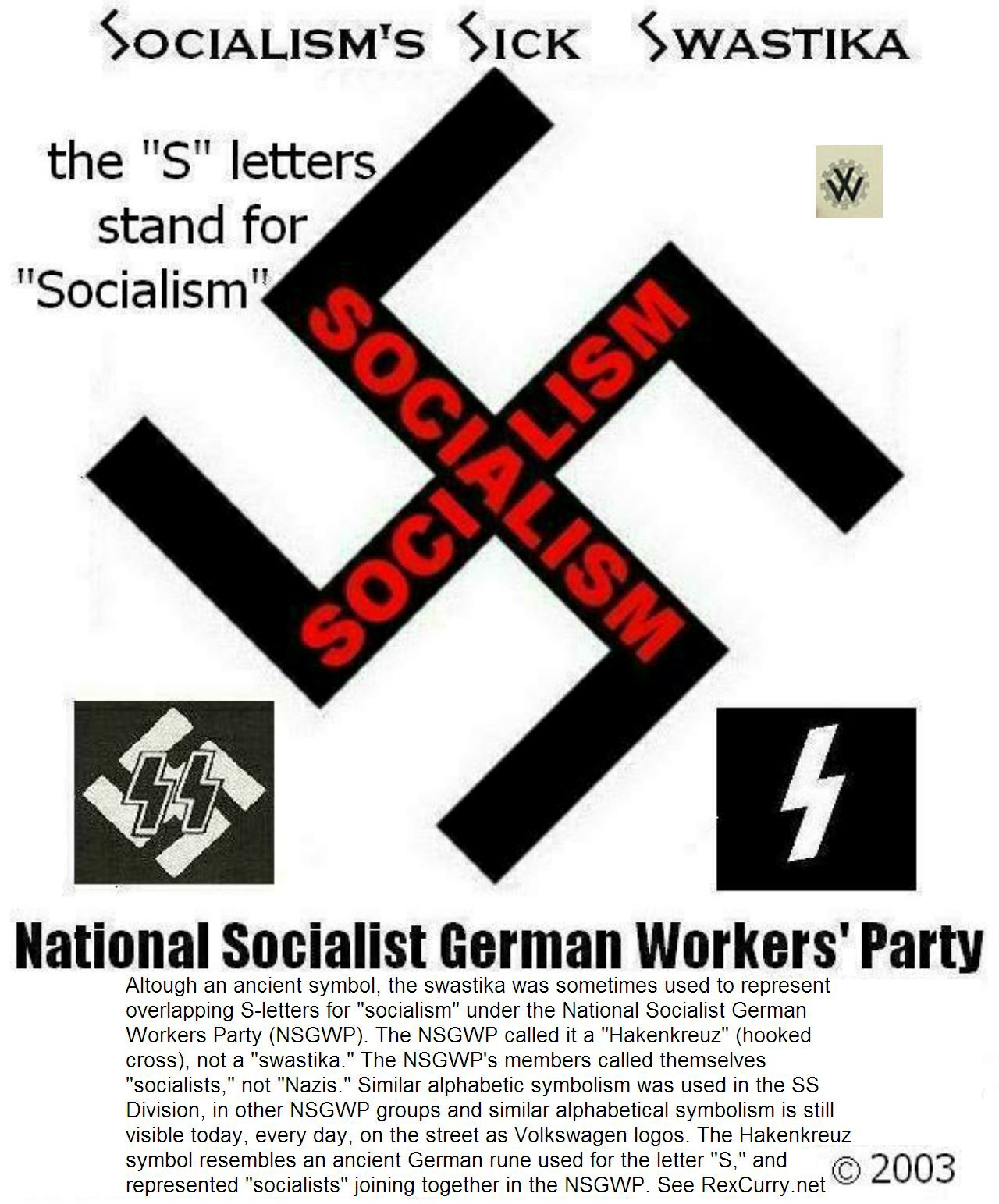
Germany in the 1930's often used symbols for letters and words. Common symbols under the National Socialist German Workers' Party (NSGWP) often used the "S" shape, including the side-by-side use in the "SS" Division and the overlapping use in the swastika.

The NSGWP's leader was aware of the practice, and perhaps the source of the practice, in that he incorporated the same symbolism into his own bizarre signature. It was a manner of declaring his socialism every time he signed his name with his signature's "S" shape. http://rexcurry.net/bookchapter4a1a4.html 

It is part of growing evidence that supports the discovery by the noted symbologist Dr. Curry that the swastika, although an ancient symbol, was used also to represent "S" shapes for "Socialism" and its victory under German National Socialists. http://rexcurry.net/book1a1contents-swastika.html

Allach Porcelain was produced in the small German town of Allach just outside of Munich between the years of 1936 and 1945. In 1936 the "Porzellan Manufaktur Allach" was acquired by the SS Division under the National Socialist German Workers' Party. The leader of the SS, known for his obsession with socialism, saw the state acquisition of a porcelain factory as a way to establish an industrial base for the production of works of art that would be representative of the victory of socialism in Germany. The Allach enterprise had a sinister purpose of promoting the his personal vision of German socialism.

It is interesting to note that leader of the SS had two "H" letters in his own name and also had a very stylized signature.

Surprisingly, the majority of items produced at Allach as collectables included blatant imagery associated with German Socialist ideology.  The Allach symbol is entwined "S" letters as a reference to the "SS" or more generally to "state socialism" as symbolized by the swastika as the symbol of the National Socialist German Workers' Party.

As output at the Allach factory increased, the German socialists moved production to a new facility near the Dachau concentration camp. The accusation arose that the socialized factory might have been taking advantage of slave labor, similar to what was done throughout the socialist Wholecaust (of which the Holocaust was a part): 65 million slaughtered under the Union of Soviet Socialist Republics; 49 million slaughtered under the Peoples' Republic of China; 21 million slaughtered under the National Socialist German Workers' Party. That accusation was denied by the factory managers at the Nuremberg Trials. Initially intended as a temporary facility, Dachau remained the main location for porcelain manufacture even after the original factory in Allach was modernized and reopened in 1940. The factory in Allach was instead retrofitted for the production of ceramic products such as household pottery.

The fall of German National Socialism brought an end to the Allach concern. The Allach factories were shut down in 1945 and never reopened.