| Frightening information about the history of
the Pledge of Allegiance is at http://rexcurry.net/book1a1contents-pledge.html
(with shocking historical photographs). For fascinating information about symbolism see http://rexcurry.net/book1a1contents-swastika.html Hear audio on worldwide radio at http://rexcurry.net/audio-rex-curry-podcast-radio.html |
|
|
|
| Oppose the National Socialist German Workers'
Party and its socialist legacies that exist in today's government.
For more information regarding Nazi policies in the USA see http://rexcurry.net/police-state.html |
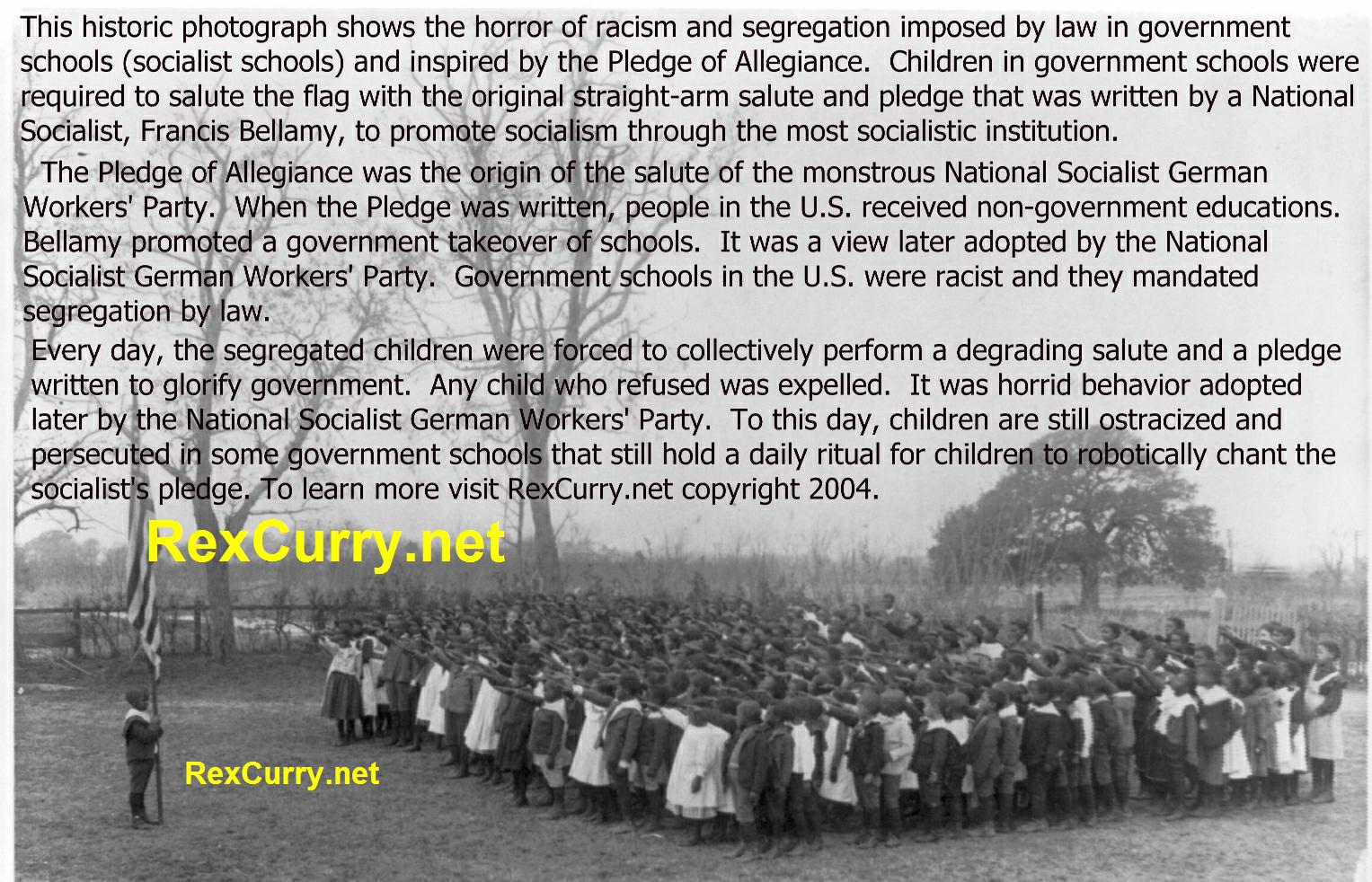
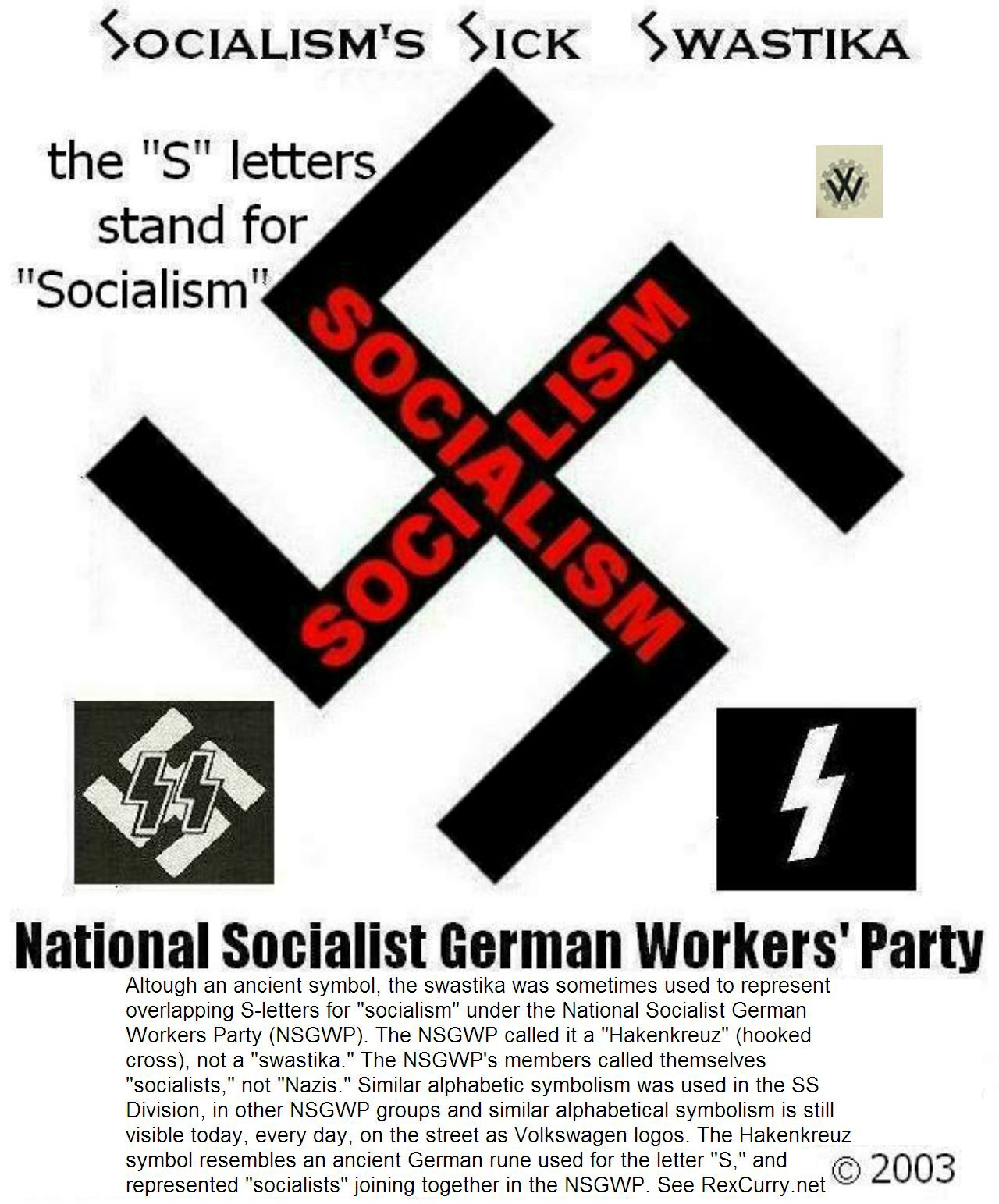
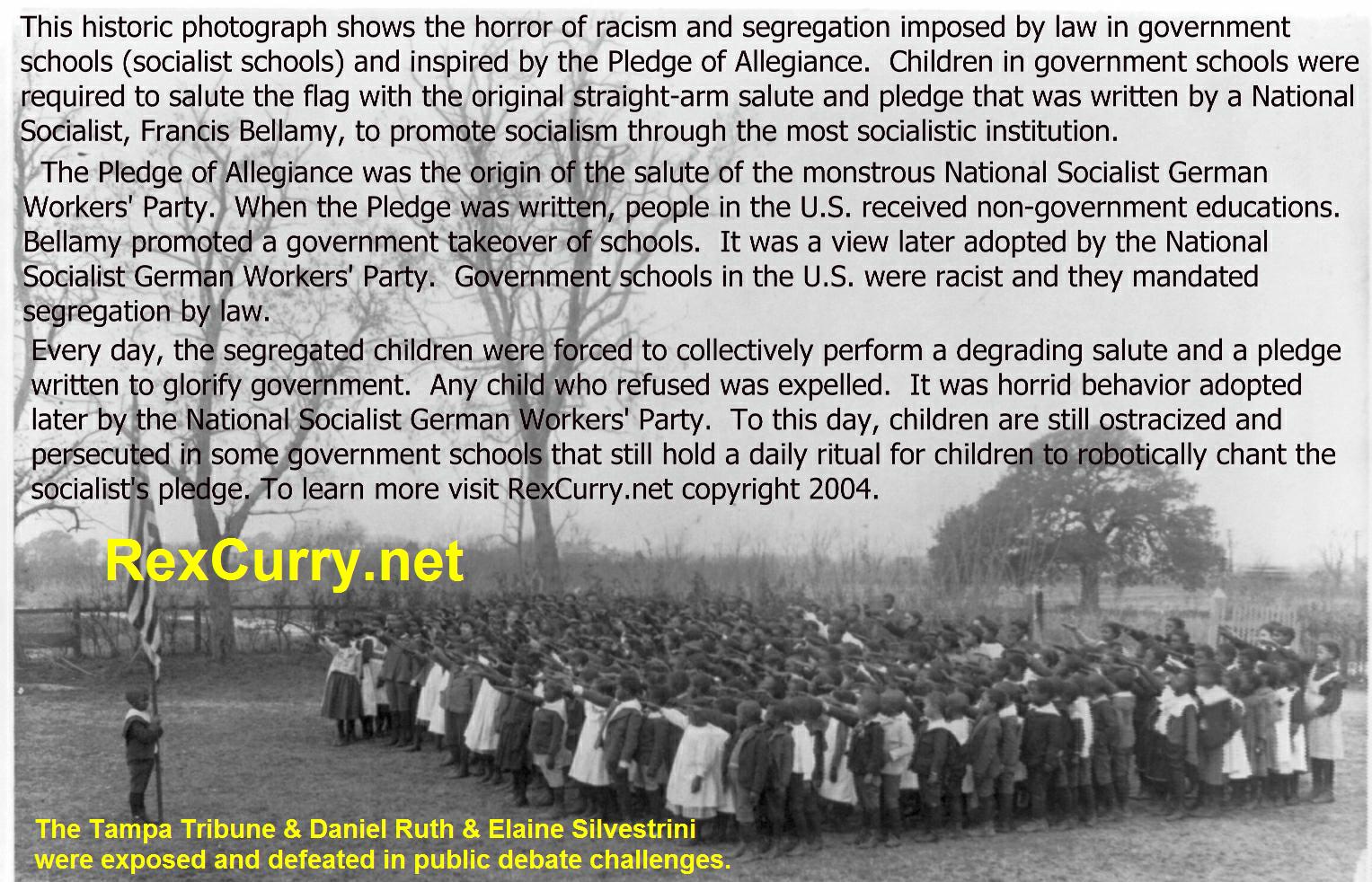
It is no surprise that the stiff-arm salute used in Germany was borrowed from the United States. Adolf Hitler paid much attention to activity in the United States. His book Mein Kampf makes repeated references to the American situation. http://rexcurry.net/national-socialists-usa.html When the first English-language edition of Mein Kampf was later published in the United States, the editors inserted a footnote after the book's brief reference to Henry Ford: "These reflections are copied, for the most part, from the Dearborn Independent, Mr. Henry Ford's newspaper." The footnote went on to explain that the propaganda once disseminated by Ford's journal "is still current in Germany." The only American named in Mein Kampf is Henry Ford. Part of that mention states: "one great man, Ford, to their exasperation, still holds out independently there even now." According to the book "The American Axis: Henry Ford, Charles Lindbergh, and the Rise of the Third Reich" (by Max Wallace - 2004) Ford's ideas imbue the entire book, Mein Kampf. Entire passages and numerous ideas are actually lifted verbatim from the pages of Ford's most notorious book. In comparison, the stiff-arm salute had been compelled during the "Pledge of Allegiance to the Flag" in government schools in the United States from 1892, three decades before the creation of the National Socialist German Workers Party. When the government took over schools, it imposed segregation by law, and taught racism as official policy. In segregated classrooms, children were forced to perform the stiff-arm salute and robotic chanting to the flag en masse. German socialist dogma is the same dogma that was touted in the late 19th century by National Socialists in the USA. Francis Bellamy (author of the "Pledge of Allegiance") and his cousin and cohort Edward Bellamy (author of the pathetic book "Looking Backward") wanted the government to take over all schools, food, clothing, shelter, goods and services and create an "industrial army" to impose their "military socialism." See the video documentary at http://www.youtube.com/watch?v=BssWWZ3XEe4 Edward Bellamy's book was an international bestseller translated into every major language, including German. Edward Bellamy had many German connections. http://rexcurry.net/bellamy-edward-german-connections.html Edward's career was in writing, he wrote for newspapers, and he published the "New Nation" magazine and the "Nationalist" magazine to promote national socialism. http://rexcurry.net/edward-bellamy-national-socialist.html Francis Bellamy's flag pledge ritual (and its early odd salute) was first published in the Youth's Companion magazine where Francis was a writer. The magazine was one of the most popular magazines of that time. http://rexcurry.net/pledgetragedy.html The Bellamy dogma was the motiviation behind Francis Bellamy's "Pledge of Allegiance" to the flag, the origin of the stiff-armed salute adopted later by the National Socialist German Workers Party (see the work of the historian Dr. Rex Curry, author of "Pledge of Allegiance Secrets"). http://rexcurry.net/pledge-allegiance-pledge-allegiance2.jpg It led to the use of the swastika as S-letters for "socialism" on the flag under German National Socialism. http://rexcurry.net/swastika3swastika.jpg It is the same dogma that led to the socialist Wholecaust (of which the Holocaust was a part): ~60 million killed under the former Union of Soviet Socialist Republics; ~50 million under the Peoples' Republic of China; ~20 million under the National Socialist German Workers' Party. http://rexcurry.net/socialists.html The Pledge of Allegiance has long been exalted as one of the greatest American icons of the twentieth century. Now the noted journalist Dr. Rex Curry uncovers groundbreaking and astonishing revelations about the poisonous effect that so-called heroic ritual had on Western government and how the pledge -an act adopted by the National Socialist German Workers Party - almost brought freedom in Europe to the verge of extinction. Today, the flag symbolizes authoritarianism in the USA. The historical facts above explain the enormous size and scope of government today, and the USA's police state, and why it is growing so rapidly. They are reasons for massive reductions in government, taxation, spending and socialism. With unprecedented access to suppressed photographs and files, Curry reveals how the ideological bond between the Bellamys, the Pledge-supporters and Germans culminated in an abuse of power that helped strengthen the National Socialist German Workers Party. Devastating, thoroughly researched, and engagingly written, "Pledge of Allegiance Secrets" is not only a mesmerizing, cautionary tale, but a compelling historical exposé. Help fight the enormous socialism that continues to grow in today's government. |
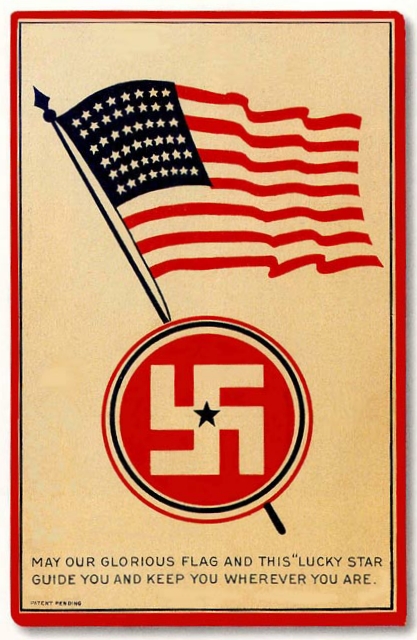
BRAINWASHING, BERNAYS & BELLAMYS Before WWI, one of America's leading propagandists for government was Edward Bernays. Bernays openly sought to use social psychology, political persuasion and advertising to construct “necessary illusions” which were fed to the masses as “reality.” Bernays described it as “engineering of consent.” The objective for Bernays was to show government, government schools and government-regulated media outlets how to gain control. http://rexcurry.net/swastika-nazi-sozi-goebbels.html Edward Bernays' impact was similar to (and built upon) that of America's most notorious and lasting propagandists for "Military Socialism" and "National Socialism": Edward Bellamy and Francis Bellamy (author of the "Pledge of Allegiance" in 1892). The "Pledge of Allegiance" produced America's stiff-arm salute and robotic chanting to flags in government's schools, where segregation was imposed by law, and racism was taught as official policy. See the video at http://www.youtube.com/watch?v=BssWWZ3XEe4 In the United States and elsewhere, America's stiff-arm salute began to spread outside of the Pledge of Allegiance to the flag. The gesture was directed toward government officials who were often on stage with the flag at mass meetings where the Pledge was led. Bellamy's pledge was the origin of the stiff-arm salute adopted later by the National Socialist German Workers Party, as shown in the work of the symbologist Dr. Rex Curry (author of "Pledge of Allegiance Secrets"). http://rexcurry.net/pledge-allegiance-pledge-allegiance2.jpg By 1915, National Socialism in the USA had inspired propagandistic presentations of the American flag posed favorably with a swastika and the phrase "May our glorious flag and this lucky star guide you and keep you wherever you are." http://rexcurry.net/swastika-flag2.JPG Another piece of propaganda from the USA bears a swastika and the wording: "Lucky Star - May this emblem protect you well from every bullet, every shell." http://rexcurry.net/45th-infantry-protect-from-bullet-shell.jpg In 1917, Edward Bernays and Walter Lippman helped Woodrow Wilson break his campaign promises and con Americans into WWI. To that end they used the Committee on Public Information (CPI ) also known as the Creel Committee. They helped Wilson foment anti-German hate during WWI. Of course, WWI led to WWII and so forth, ad infinitum, ad nauseum. http://rexcurry.net/45th-infantry-division-swastika-sooner-soldiers.html Bernays also created the war slogan “Make the World Safe for Democracy” -a patriotic mantra that many stupid Americans embraced just as they had earlier embraced Bellamy's "Pledge of Allegiance," America's straight-arm gesture, and mechanical chanting to flags in mass and on cue. Bernays and Bellamy used the technique of manufacturing ever-present dangers and then maintaining a constant state of fear by generating false government pronouncements that endlessly re-stated and exagerated the threat. The modus operandi for Bernays and Bellamy was to give those in power greater control over what Bernay's called "the mass mind." Bernays’ books "Crystallizing Public Opinion" (1923) and "Propaganda" (1928) impressed Joseph Goebbels, the propaganda minister for the National Socialist German Workers Party. Germany mimicked American behavior because Goebbels learned from the behavior of Bernays, President Wilson, and the U.S. government during World War I. http://rexcurry.net/swastika3swastika.jpg In 1933, Bernays met Karl von Weigand (a German journalist) who informed Bernays that Goebbels was using Bernays' work for Goebbels' propaganda campaigns fomenting hate, robotic chanting, straight-arm salutes, the use of government schools, children, and more. http://rexcurry.net/swastika-nazi-sozi-goebbels.html Socialists in other countries wanted to know how to brainwash a nation. It was the same brainwashing dogma behind the Wholecaust (of which the Holocaust was a part): ~20 million dead under the National Socialist German Workers' Party; ~60 million dead under the Union of Soviet Socialist Republics; ~50 million dead under the Peoples' Republic of China. "If I approach the masses with reasoned arguments, they will not understand me," Hitler noted in Mein Kampf, "In the mass meeting, their reasoning power is paralysed. What I say is like an order given under hypnosis." To this day, laws continue to order children to hypnotically chant in the Pledge of Allegiance ritual each morning in many schools in the USA. Only the gesture has changed. Here is a video example from the World War II era. http://www.youtube.com/watch?v=xipJGXUWjTU Bernays' work continued as one of the engineers of the Cold War. |