|
The government tried to overturn
a victory against sniffer dogs. http://rexcurry.net/drugdogsmain.html
The U.S. Supreme Court denied
the government's petition on Oct. 31, 2005 in case # 04-1668.
Search for Matheson on this web page
http://supreme.lp.findlaw.com/supreme_court/orders/2005/103105pzor.html
The government also unsuccessfully
appealed to Florida's Supreme Court to overturn the victory.
Florida's Attorney General fought
against Florida v. Matheson and its requirement that narcotic
K-9s must be continually trained and tested under higher
standards or they cannot be used to search people and cars.
The Florida court decisions are
at http://rexcurry.net/drugdogsflorida.pdf
(3-3-05) and the very libertarian decision (the appellate
case below) at http://rexcurry.net/drugdogs2dca.pdf
RexCurry.net argued the original
motion to suppress for Matheson.
Narco dogs are used as ruses against
humans, to violate constitutional rights against searches
and seizures. Here's how -
* Some cops ask to search cars
for no reason at all during routine traffic stops. The
practice has inspired the "SNTS" movement and its slogan "Say No To Searches!"
http://rexcurry.net/sntsmain.html
Cops ask to search because they know that most victims do not
know that drivers can "just say no" (most drivers are know-nothings
about constitutional rights). Drivers who do know are often
too meek to "just say no." It is unknown how often cops ask for
consent to search and how often consent is given under duress or
ignorance. Drivers who do not complain roadside will not complain,
learn or litigate later.
* If drivers say "no," then some
cops tell drivers that an ordeal is inevitable because
the cop radioed for a canine and it is coming to the scene.
That warning is often a lie to induce consent. There is no police
dog on the way. Here is a video with the title "Do not talk to the police"
by George Bruch
http://www.youtube.com/watch?v=zSvxiaO-TG8
* If a dog is or is not "on the
way," some cops add additional lies to make drivers think
that there will be a long wait and that the driver must stay
until a dog arrives. Cops rely on driver ignorance of the fact
that evidence will be suppressed if drivers are detained longer
than it takes to complete the traffic stop (e.g. write the ticket).
Drivers are induced to consent to search to avoid a long wait
based on lies. Cops will say things like "You should consent to search, because
the dog is going to scratch your car up" which is an actual threat of property
damage made to induce consent, and it is also an indication of a badly trained
drug dog (if it is true).
* If a dog is en route,
some cops let drivers think that they are obliged to stay
even when the cop has no reason to detain drivers any longer.
Cop's rationalize that drivers inexplicably loiter roadside
with cops, or that drivers enjoy waiting for dog sniffs. Cops
take advantage of drivers who are too stupid (or too meek) to
ask if they are free to go, so that drivers "consent" to unwarranted
detention by not leaving.
* Cops lie about how long it
takes to write tickets or to obtain a radio response
on tag inquiry. If a dog is actually en route, then some cops
write tickets very slowly, until the dog arrives.
* When cops need consent, and
drivers say "no," then there is no basis to search. Without
consent, cops need "probable cause" to search. Cops can create
cause by claiming that canines alerted, even if there are no
alerts (or if the canine was cued). A search is forced against
the driver's will. In January 2005, the U.S. Supreme Court ruled
in Illinois vs. Caballes that a dog sniff during a traffic stop was
not a "search." Caballes and similar cases turn canines into props
for lies. When dogs are used as props for lies, it doesn't matter
whether dogs are well-trained.
* Even after the dog arrives, cops still try to obtain consent
because they think that they can more easily avoid suppression of evidence
motions that expose the cop's lies, expose the dog's worthlessness,
destroy the dog's future credibility, forcing the dog to be retired, and
a new worthless dog to replace it (until that dog is exposed). With the
dog at the scene, cops will repeat statements such as "You should consent
to search, because the dog is going to scratch up your car" which is an
actual threat of property damage made to induce consent, and it is also
an indication of a badly trained drug dog (if it is true) and a bad handler.
* The fraud is about more than cops stealing drugs. It is also about
cops stealing cars, money and other valuables. Under civil forfeiture,
if the cops claim the dog alerts, and then claim that drugs were found,
then what follows is the seizure of the car, money and other valuables, even
real estate. Regardless of the criminal charges, the theft of the victim's
property becomes another separate nightmare.
* If a dog alerts and nothing
is found, then cops will never record that as an error.
If cross-examined later, they will testify that the dog detected
lingering odors of contraband that were recently present.
Cops will testify that dogs never make mistakes, never have and
never will, and that apparent errors are skillful detections of
lingering (residual) odors of contraband. No one can question
a dog about whether the cop is lying or mistaken, and it is usually
a waste of time to ask a cop the same types of questions.
* Many errors by drug dogs cause
lawyers to wonder if police carry drugs to plant scents
so that drug dogs will alert. Some news items support such
speculation in cases where drugs have been planted by police.
http://rexcurry.net/drugdogsframe.html
Drug laws are wrong in the first place, and in
the second place drug laws cause more wrongdoing by government
during enforcement.
Government's attitude toward
your liberty is like a dog at a fire hydrant.
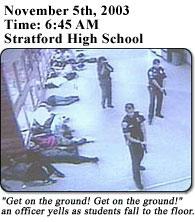
Police-state tactics were witnessed
worldwide via videotape from Goose Creek High School in
South Carolina, where children were forced to the floor in
handcuffs and terrorized by dogs and cops with guns drawn.
http://rexcurry.net/drugs-goose-creek.ram
Video http://highwire.stanford.edu/~straffin/JS1111.rm
Nothing was found.
Video http://www.youtube.com/watch?v=N6r9neE89Fg
Don't Howl Hitler: Stop the USA's growing Police State
http://rexcurry.net/police-state.html

Video http://www.youtube.com/watch?v=xjMfckchl_s
Bad dogs? http://rexcurry.net/drug-dogs-goose-creek-police-raid.html
In other schools, classes have been interrupted and
the children were marched out and lined up to be harassed
by a dog.
The Caballes case foreshadows
more police-state possibilities: Uniformed law enforcement
marching through neighborhoods with German shepherds on leashes
sniffing anything and everything -every car parked on or near
the street, the air emanating from homes, neighbors walking
outside. Imagine the same thing at any place of business or employment,
and police marching German shepherds through parking lots,
car to car, for no reason other than fishing expeditions. Imagine
the same nightmare in any shopping area or a downtown street area,
a festival, a bar's parking lot, with uniformed agents with German
shepherds sniffing pedestrians and their bags and cars and anything,
and stopping anyone on an alleged alert and going through their
purses, persons, cars, etc, right there on the street.
Drug dogs are like humans in
that they must be taught to approach peaceful people and
search them, so that humans can be arrested, handcuffed and
imprisoned for decades under modern prohibition. That is not
an easy trick to teach a dog. It is easier to teach humans.
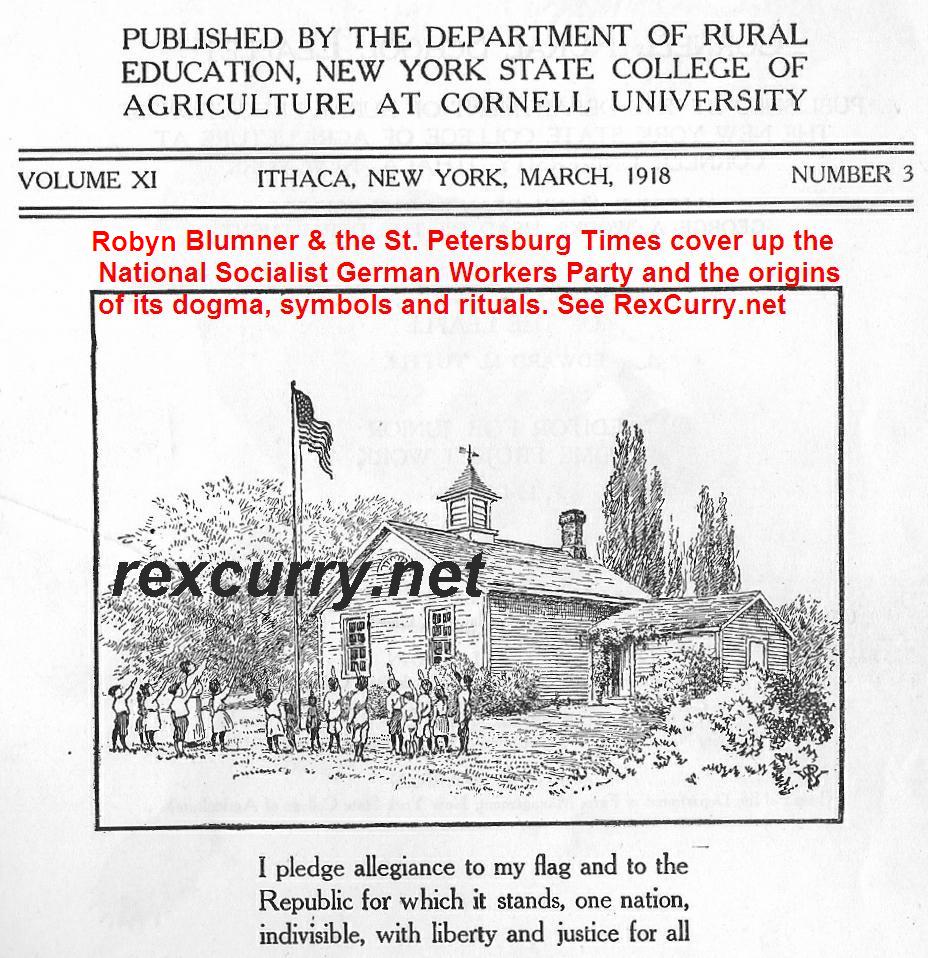
It is a wonder why
the kids weren't instructed to robotically chant the Pledge
of Allegiance during the ordeals (and with the Pledge's original
straight-arm salute). A breed that is used often as drug
dogs is the German Sheppard. The police state resembles the National
Socialist German Workers Party (Nazis).
As an attorney, I am often consulted
by people victimized in searches by dogs trained to smell
drugs. A drug dog's skills are often overestimated because
people anthropomorphize dogs. A humanlike quality that dogs have
is that they are natural libertarians with no interest in the
war on drugs.
I am the attorney who argued
the original motion to suppress in Florida v. Gary Alan
Matheson, that curbed drug dogs in Florida.
http://rexcurry.net/drugdogs2dca.pdf
Matheson's case included oral
argument before Florida's Supreme Court and the public
has a rare opportunity to view a video of the justices' questions
and the arguments linked at http://www.wfsu.org/gavel2gavel/archives/05-01.html#JAN10
The Matheson case points out
the lack of credibility of drug dogs and their employers.
No one can question a dog about
whether the cop is lying or mistaken, and it is usually
a waste of time to ask a cop the same types of questions.
Drug dogs are like humans in
that they must be taught to approach peaceful people and
search them, so that humans can be arrested, handcuffed and
imprisoned for decades under modern prohibition. That is not
an easy trick to teach a dog. It's easier to teach humans.
All drug dogs are "playing a
game," as are some humans who support modern prohibition.
The dogs are taught using dog toys. The toys are hidden with
drugs to trick the dog into a game of searching for its toy
by associating it with drug odors. Many errors can happen. There
is always the danger that the dog will alert on anything that resembles
or smells like its toy (towels, tennis balls, car carpet, etc.).
Cabelles holds that cops can
take dogs fishing. Caballes involved a "legitimate"
traffic stop for speeding (that turned into 12 years for pot).
Dog-fishing in parking lots or on sidewalks should still be opposed.
Random drug checkpoints have already been found unconstitutional
by the Court.
Here are the totalitarian police-state
possibilities that the U.S. Supreme Court opened up:
Imagine uniformed law enforcement marching through your
neighborhood with German Shepards on leashes sniffing anything
and everything -your car and every car parked on the street,
the air emanating from your home, you walking outside.
Imagine the same thing at your place of business or where you work,
police marching German Shepards through the parking lot, car
to car, for no reason other than a fishing expedition and entering
any vehicle where there is an alleged alert. Imagine the same
thing in any shopping area or a downtown street area, a festival,
a bar's parking lot, uniformed agents with German Shepards
sniffing pedestrians and their bags and cars and anything and stopping
anyone on an alleged alert and going through their purses, persons,
cars, etc, right there.
Dogs are used for human lies.
Police cannot search a car without probable cause or consent,
and an easy way to claim probable cause is to claim that
a dog alerted. It doesn't matter whether a dog is accurate.
The dog is just present as cover-up to testalie in court. Dogs
are perfect pets for perjury. If contraband is found then the
arrest will probably stand. If nothing is found, the
driver leaves shaken, but I know of no case where the driver even
complained or sued.
Drug dogs turn simple traffic
stops into fishing expeditions for drug busts. Driver's
are asked for consent to search without any suspicion at all.
When drivers refuse consent, an officer threatens to bring a
dog in order to intimidate drivers into consenting to avoid a wait.
Persistent refusal prompts cops to radio for a dog, and then
claim that the dog alerted.
Any case that lacks a videotape
of a dog's actions on the scene should result in
rejection of testimony that the dog alerted, or did so without
cueing.
Drugs dogs often bark up the wrong
tree. Motions to suppress should argue that the dog's training
and history show false positives and problems that make
the dog unreliable for searches. In Cabelles, Justices Souter
and Ginsburg dissented, pointing to studies showing that drug
dogs frequently return false positives (12.5-60% of the time, according
to one study).
Moreso than in humans, the libertarianism
of drug-dogs always resurfaces, and must be suppressed
constantly by law enforcement retraining. Without constant
retraining the dogs lose interest and stop performing accurately.
Record-keeping is a must to know whether dogs are guessing,
or seeing cues. Only with record keeping and independent testing
can any judge draw any conclusion from the dogs game playing out
on the street.
Dogs approximate humans in that
they go along with the system to avoid disapproval from
peers (teachers, school students, friends, etc., in the case
of humans). Drug dogs do not want disapproval from their police
handlers. Dogs play the game, and will try to guess and read
cues, because they are searching for approval, not for drugs.
Dogs match humans in that if
you influence them enough they will do anything -- like
passing the 18th amendment. In the dogged pursuit of modern
prohibition, some dogs are slow learners as are some humans.
The government's war on drugs is a dog chasing its own tail.
Let's liberate drug dogs. Return
them to protecting people from violence and theft, which
is also the only proper purpose of law enforcement. Dogs
should be man's best friend, not man's persecutor. Drug dogs are
natural libertarians.
Rex Curry Attorney at Law in Tampa,
FL. He can be reached via email at:
lawyer (at) rexcurry.net
The oldest living medical marijuana patient (OLMMP) said: "Rex,
thanks for your work against drug dogs. I was
in the airport recently and a dog sniffed my bag and walked
away. I called to the handler and asked if the dog was trained
for bombs or drugs, and the handler said 'for drugs.' So
I told him to bring the dog back because I had marijuana in my bag."
RexCurry.net phoned OLMMP, but only reached his voicemail.
OLMMP called back and said "I am sorry that I missed your call.
I had stepped outside to take my medicine."
|

PLAYBOY MAGAZINE: Professor Curry
made Playboy without taking his clothes off http://rexcurry.net/drugdog.jpg
The Drug Sense Weekly interview
http://rexcurry.net/drug-sense-weekly.html
The History News Network
http://hnn.us/blogs/entries/15858.html
MORE ON DRUG DOGS - http://rexcurry.net/drugdogcases.html
and see many cases here
http://www.k9fleck.org/narlegal.htm
State v. Wright case from Arizona 10/31/08, (the Wright case cites
the Matheson case) http://rexcurry.net/drug-dogs-jacquelyn-wright-arizona.pdf
United States v Ervin Christy in Nebraska 03/19/2008
http://rexcurry.net/drug-dogs-ervin-christy-nebraska-us.pdf
Are drug dogs used to plant drugs and to frame
people? Some evidence suggests that is the case. http://rexcurry.net/drugdogsframe.html
The U.S. Supreme Court ruled that
sniffer dogs at traffic stops do not violate the 4th amendment,
per se. There is still room for attacking the credibility
of the dogs and their handlers.
Florida's 4th District Court
of Appeal (DCA) and the 5th DCA have certified conflict
to the Florida Supreme Court regarding the Matheson issue.
Drug dog alert cannot be used
to get warrant for a home? More leashes for drug
dogs. The police may not use a drug dog alert outside the defendant's
home to obtain probable cause for a warrant to search the home,
the Fourth DCA ruled February 15, 2006. State v. Rabb, ___ So. 2d
___, 31 F.L.W. D510 (4th DCA 2/15/2006). The case can be viewed
at http://www.4dca.org/Feb2006/02-15-06/4D02-5139.op.pdf
or under the "opinions" section at http://www.4dca.org and then looking
under the 2/15/06 opinion date, or try an internet search
for the case name. The earlier Raab case was at State
v. Rabb 4th DCA 09/14/05
http://www.4dca.org/Sept%202005/09-14-05/4D02-5139.pdf
As of 4-25-06 the Rabb case SC06-417
was still active at Florida's Supreme Court at http://jweb.flcourts.org/pls/docket/ds_docket_search%20
State v. Laveroni 4th DCA
30 Fla. L. Weekly D2173 new dog case
http://www.4dca.org/Sept%202005/09-14-05/4D04-2443.pdf
State v. Coleman 5th DCA 09/30/05
aligns w 4th DCA
http://www.5dca.org/Opinions/Opin2005/092605/5D04-2739.op.pdf
Missing dog records
drop charges? http://rexcurry.net/drugdogs3.html
U.S. District Court suppresses
evidence in a dog gone case
for RexCurry.net http://rexcurry.net/law-drugs-suppress.pdf
MORE
LINKS FOR LIBERATING DOGS ARE BELOW
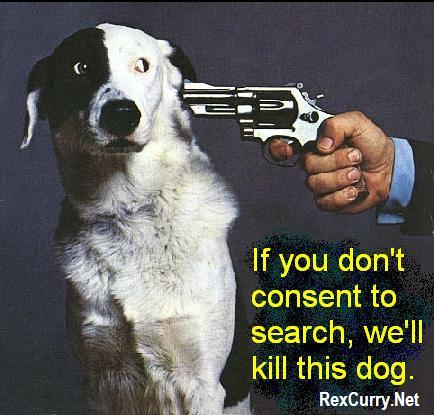
If you don't consent to search, we'll
kill this dog http://rexcurry.net/dog4.jpg
The Sheriff said "I'll
kill myself if you don't waive your rights" http://rexcurry.net/police-state-sheriff-blazing-saddles.jpg
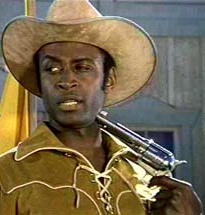
http://rexcurry.net/police-state-sheriff-blazing-saddles.jpg
The Sheriff said "I'll kill myself if
you don't waive your rights"
Free the Drug Dogs!
by Keith Halderman
An old friend of mine attorney Rex Curry, who was one of the first
libertarians I ever met and who helped transform much
of my thinking, developed a case that may be headed to the
Supreme Court. Florida v. Matheson, which he won, involves a
challenge to the veracity of drug dogs searches. The state of
Florida is appealing and the issue is on the high court's docket.
The September 16th issue of the online journal DrugSense Weekly
has an interview with Mr. Curry in which they ask him,
"Given the problems with drug dogs explored at your website
(see link above), why do you think they are so
popular with police departments and municipal government?”
He replies “Oh that is easy.
You have to remember that there is a strong incentive
for law enforcement not to CARE whether the dogs are accurate.
The dogs can simply be props for lies, in that the dogs are there
to overcome refusals to consent to search, and the dog provides
law enforcement officers (LEOs) with the ability to say that
an alert occurred even if there was no alert. And here is another
angle: some LEOs do not want a "drug dog," they want a "car dog,"
in that they want a dog that when shown a car will alert, as if to
say "yes that is a car." For some LEOs the goal is to search whenever
the LEO desires, period. The dog is simply a ruse to do so. That is
why the dogs are so popular. Do not be confused with the idea that
there are "problems with drug dogs." For some LEOs those are not problems
at all. And again, that is why some LEOs have no interest in maintaining
records about their dogs."
***************
You made Playboy without taking your clothes off. http://rexcurry.net/drugdog.jpg
The Matheson case is one of your best. I am still getting
calls about your case.
- Doc C, Texas.
***************
This page (and below) is a collection of resources for lawyers dealing
with drug dogs. Please send in any motions, appeal
decisions, tips, etc., to
lawyer AT rexcurry.net
and an effort will be made to post them here.
Rex. I have just visited
your website and would like to congratulate you on what
is very clear your shear hard work. I myself am a dedicated
Security and Drug detection dog handler investing thousands
of pounds in training. In addition I am company director of
Watchdogs Ltd and am concerned about the level of training
handlers have not completed. In addition within the UK we are about
to come under Licensing which many of us have been waiting for for
a long time. There is no requirement for a drug dog handler to have
a licence so the handlers working security dogs who know they won't
be able to get a licence are now trans-shipping to drug dog handling.
Having said that I do feel a stop will be put to this soon. Keep in
touch. Phil H., Director Watchdogs Ltd, Member of NASDU NTIPDU BPSCA
BIPDT JSIC.
A fan of RexCurry.net writes
(dated March 24, 2005): In Florida, the Pinellas County
Sheriff's department is currently expanding its sniffer dogs
from 30 to 90. A new building is being built just south of Pinellas
Park to house them. All german shepherds but not all drug dogs,
and note also that our population is expanding rapidly here, with
lots of tourists and people moving in and out.
Another fan writes: I actually
discovered a vacant lot where some dog-cops were meeting
and I saw them signal training the dogs to "GO OFF" on cue
with very slight hand motions. Then I saw them walk dogs around
a COP car they used (this shows it will work in any situation) and
when the cop made this little twitch with one finger extended, the
dog would bight at the door handle and tires and stand on its back
legs and bark at the windows etc...
MOTION TO SUPPRESS DRUG DOG SEARCH
- this is the initial motion that started the path to victory.
MOTION TO SUPPRESS 2 THE SEQUEL - more details &
humor. How government fornicates the canine.
THE
EXPERTS USED RE: DRUG DOGS - attorneys nationwide
contact me to use them in other cases.
APPEAL
CURBS DRUG SNIFFING DOGS - this is the appellate decision
curbing drug dogs. It is presently awaiting decision
after having oral argument before the Florida Supreme Court on
January 12, 2005. http://rexcurry.net/drugdogs2dca.pdf
MORE
ON DRUG DOGS - this is how drug dogs can be used in ruses
to violate the constitutional rights of humans.
DRUG
DOGS ARE LIBERTARIANS - they require constant indoctrination
to change them.
NEWSPAPER
EDITORIAL - Click here for a favorable newspaper editorial.
NEWSPAPER
ARTICLE - Click here for a news story on the opinion.
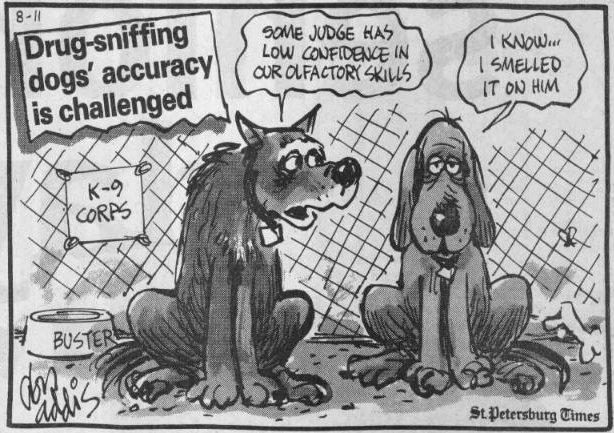
EDITORIAL
CARTOON - Click here for an editorial cartoon.
INNOCENT MAN FREED - after 22
years in prison, by discrediting drug dog. http://rexcurry.net/drugdogs2.html
Stop assembly line courthouse searches http://rexcurry.net/searches-courthouse-motion-limine.wpd
Stop the demand for identification http://rexcurry.net/searches-courthouse-motion-identification-demand.wpd
http://rexcurry.net/searches-courthouse-motion-limine-reconsider.wpd
http://rexcurry.net/searches-courthouse-motion-identification-demand2.wpd
http://rexcurry.net/searches-courthouse-motion-limine2.wpd
Stop drug dog searches http://rexcurry.net/drugdogsmain.html
say no to searches http://rexcurry.net/snts.html
http://rexcurry.net/sntskids.html
http://rexcurry.net/sntsguy.html
http://rexcurry.net/sntsmain.html
http://rexcurry.net/law%20graphics/refusal.html
Pigs use dogs to fish for humans.
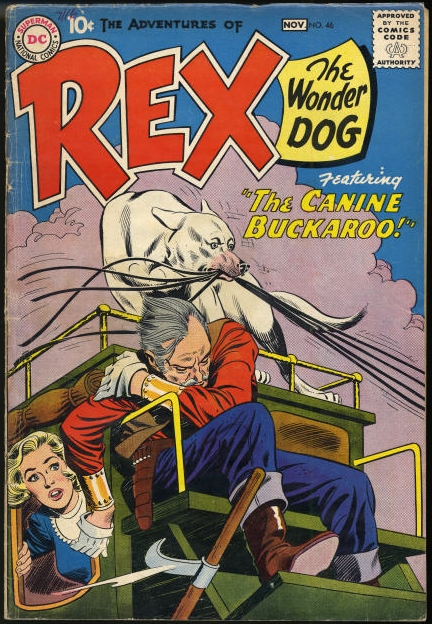
The USA needs
Rex the Wonder Dog !!!
--- NOT ADOLF THE
NAZI DOG.

Rx means Rex. The prescription
is liberty, and freedom is the pill. Liberty lets everyone
live like a king. Repeal modern prohibition. GET HIGH
ON FREEDOM.
Drug dogs are often used
as ruses to violate the constitutional rights of humans.
In the war on drugs, the government lies like a dog.
A dog is man's best friend.
He should not be man's worst enemy.
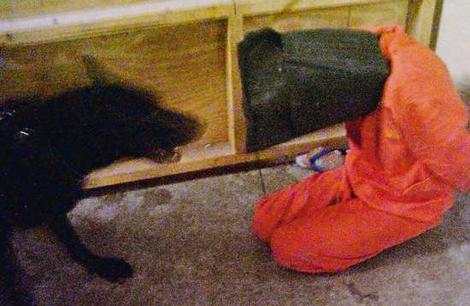
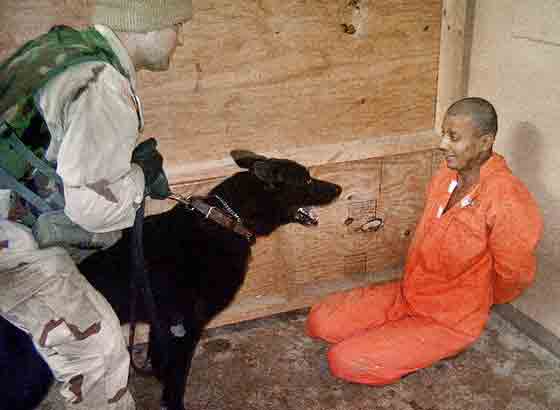
TERROR INDUCED VIA BARKING DOGS http://rexcurry.net/dog-torture-terrorism-abu-ghraib1d.jpg
Bad dogs
kill children and adults
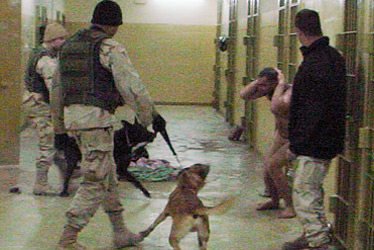
BARKING DOGS USED FOR TERRORISM http://rexcurry.net/dog-torture-terrorism-abu-ghraib1d.jpg
Barking Dogs terrorize humans
Dogs are used for torture and to produce fear.
http://rexcurry.net/dog-torture-terrorism-abu-ghraib1b.jpg
http://rexcurry.net/dog-torture-terrorism-abu-ghraib.jpg
http://rexcurry.net/dog-torture-terrorism-abu-ghraib1d.jpg
|






 edward bellamy
  francis bellamy
  rex curry
  libertarian
  pledge of allegiance
  swastika